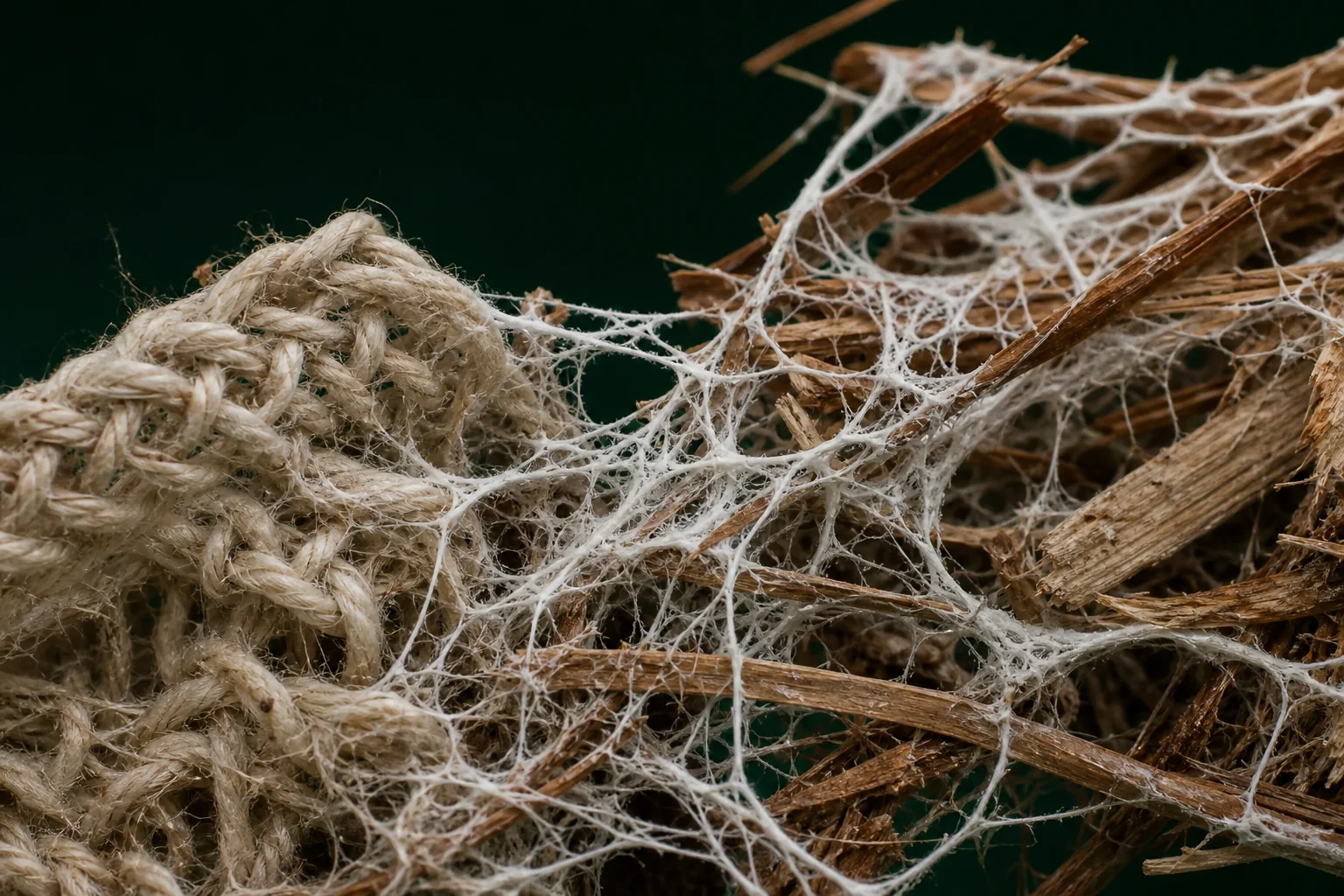
Textile waste provides a diverse fiber resource that can be recovered and reformulated rather than sent directly to disposal.
Regional Natural Materials
Date-palm residues and other suitable natural fibers can provide locally relevant structure, texture, and material diversity.
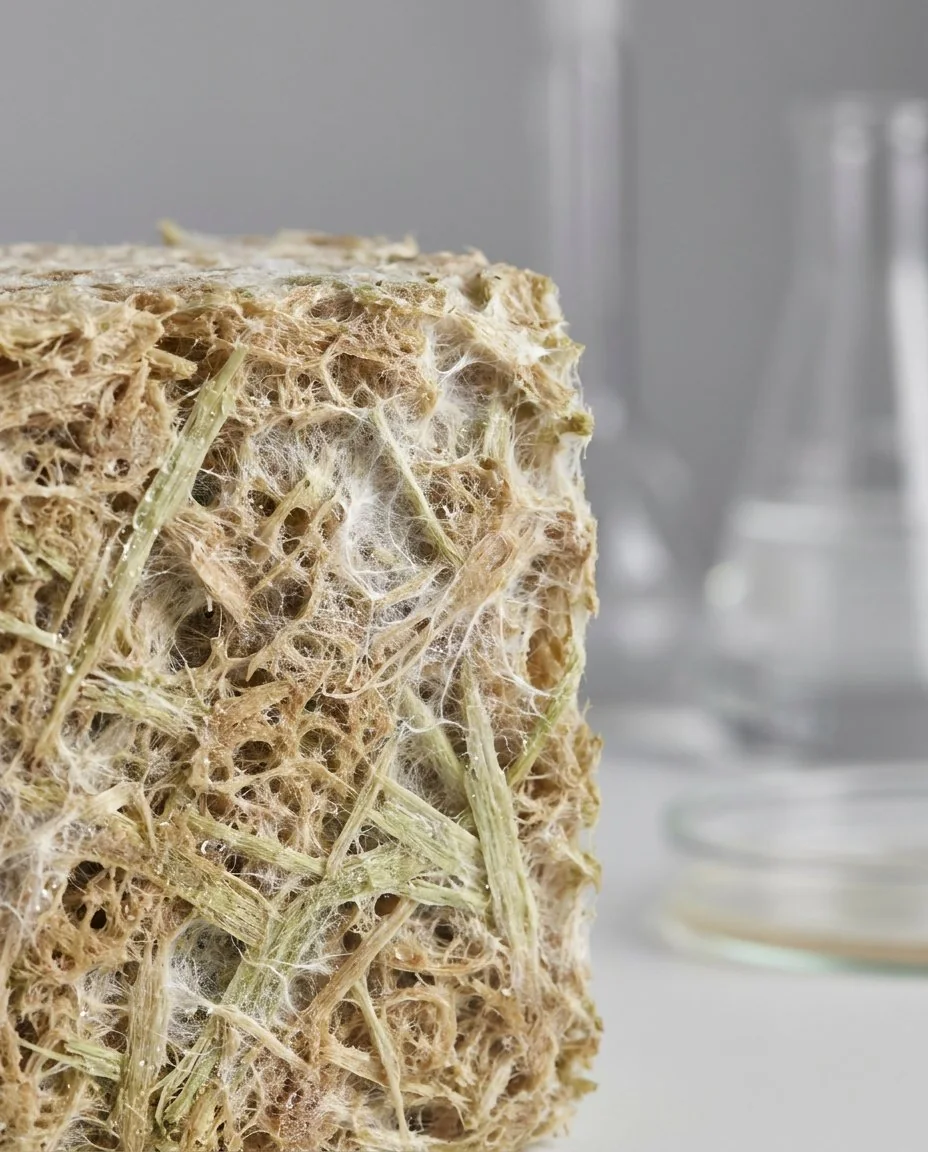
Mycelium
Mycelial growth creates a network through prepared fibers and contributes to formation of the composite.
Process
From feedstock to panel.
01
Feedstock Selection
Textile and natural-fiber streams are assessed for composition, cleanliness, size, and suitability.
02
Fiber Preparation
Materials are sorted, cleaned where necessary, reduced to controlled dimensions, and blended.
03
Formulation
Fiber ratios, moisture, nutrients, mineral additives, and inoculation conditions are adjusted.
04
Biological Growth
The material is formed and incubated under controlled environmental and contamination-management conditions.
05
Drying and Pressing
Growth is stopped through drying. The composite may remain lightweight or undergo controlled pressing.
06
Finishing and Testing
Panels are cut, sanded, treated, coated, laminated, or machined as required before validation.
Confidential formulations and process parameters are not disclosed.
Product pathways
Two formats. Different performance targets.
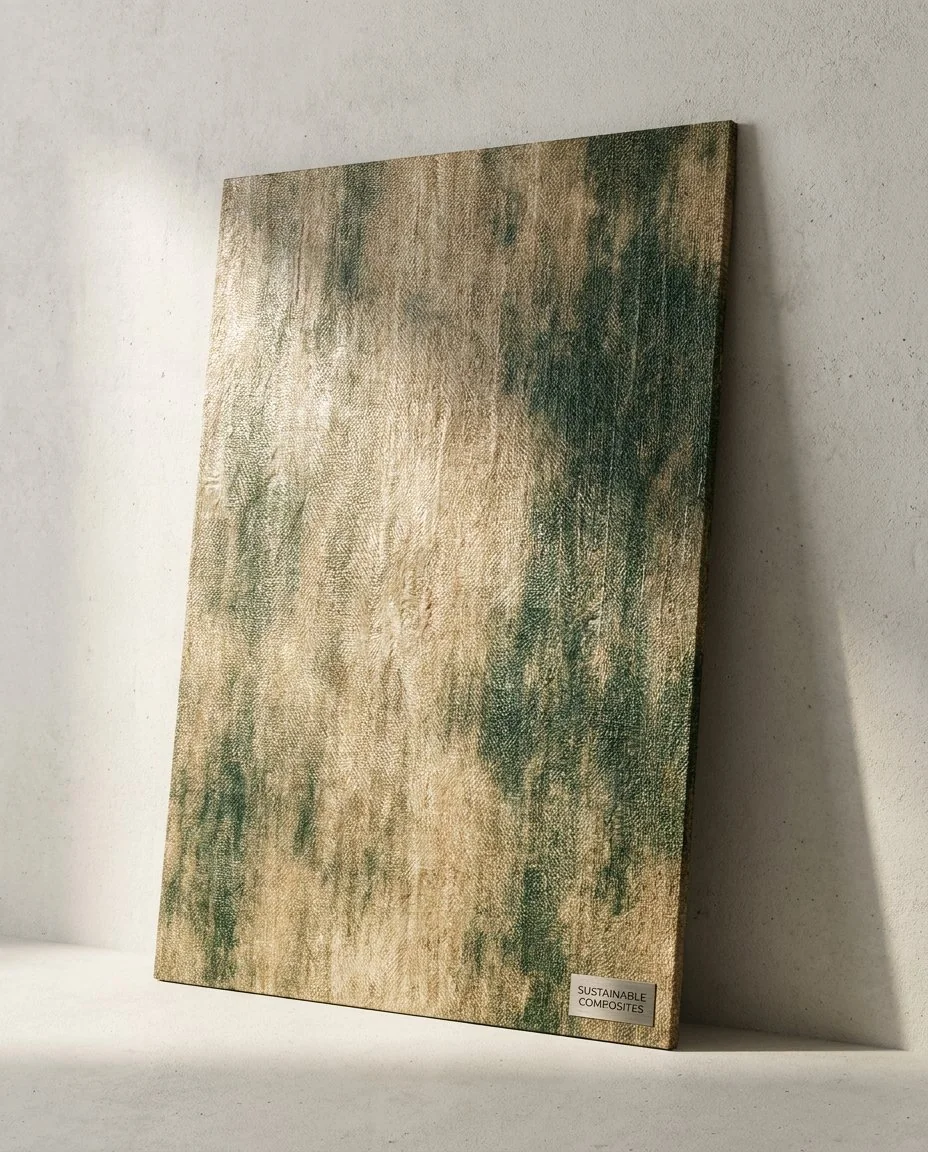
Lightweight Biofabricated Panels
Low-density formats preserve more of the porous composite structure and are being developed primarily for acoustic and insulation-related applications.
Pressed Composite Boards
Higher-density formats use controlled pressing and finishing to target improved strength, surface quality, dimensional stability, and compatibility with interior board applications.
Why mycelium?
An enabling biology inside an engineering system.
Fiber Integration
The network grows through and around prepared fibers.
Low-Temperature Formation
The biological phase takes place under comparatively mild processing conditions.
Formulation Flexibility
The system can be adjusted across different fiber combinations and product densities.
Circular Design Potential
The platform is being developed around recovered feedstocks and reduced dependence on conventional synthetic resin systems.
Development priorities
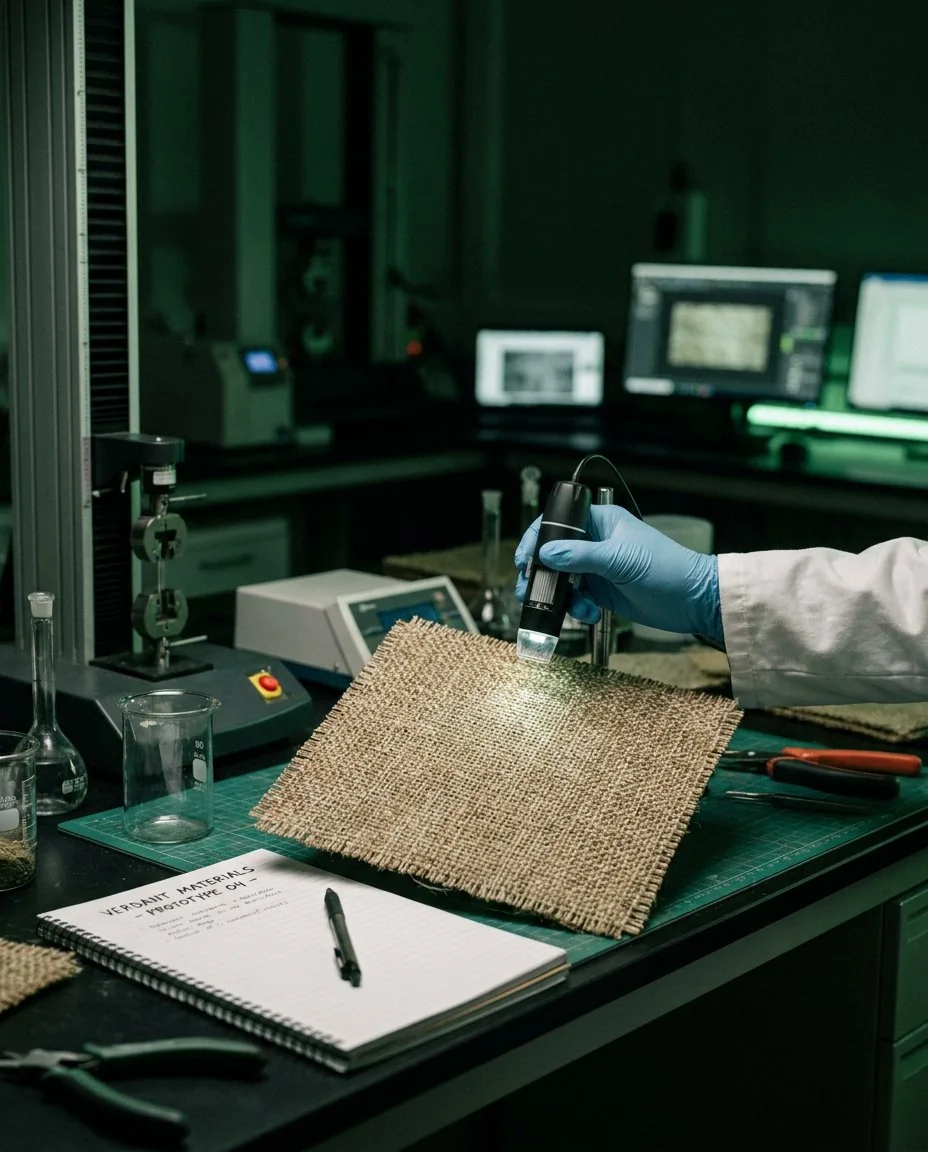
Performance validation guides the next stage.
Current development priorities include fire behaviour, acoustic absorption, thermal conductivity, flexural and compressive properties, moisture resistance, dimensional stability, surface finishing, durability, manufacturability, and certification readiness.
Testing
Standardized test methods will be used to establish defensible performance claims.
Process Consistency
Formulation and manufacturing controls are being refined for repeatable panel quality.
Scale-Up
Pilot work will inform equipment, throughput, quality, and partner requirements.